
QTF8-15 Automatic Block Machine: A Practical Choice for Growing Block Factories
A growing block factory eventually reaches a point where adding more workers does not necessarily mean better production.
The real challenge is keeping the entire line moving at a steady pace.
Concrete has to be mixed on time, material needs to reach the mold consistently, fresh blocks must leave the machine smoothly, and every cycle needs to produce a similar result.
The QTF8-15 Automatic block machine is designed around this kind of continuous production.
Rather than relying heavily on manual handling, the system brings feeding, forming and block transfer into a more controlled workflow.

What Happens During a Production Cycle?
The basic process is easy to understand.
Prepared concrete is fed into the mold box. The material is distributed across the mold, then vibration and pressure compact it into the required shape.
Once forming is complete, the mold releases the fresh blocks and the machine prepares for the next cycle.
What matters is not producing one good pallet.
A commercial block machine needs to repeat that process throughout the working day while keeping block dimensions and appearance reasonably consistent.
That repeatability is one of the main reasons manufacturers move from smaller manual equipment to automatic production lines.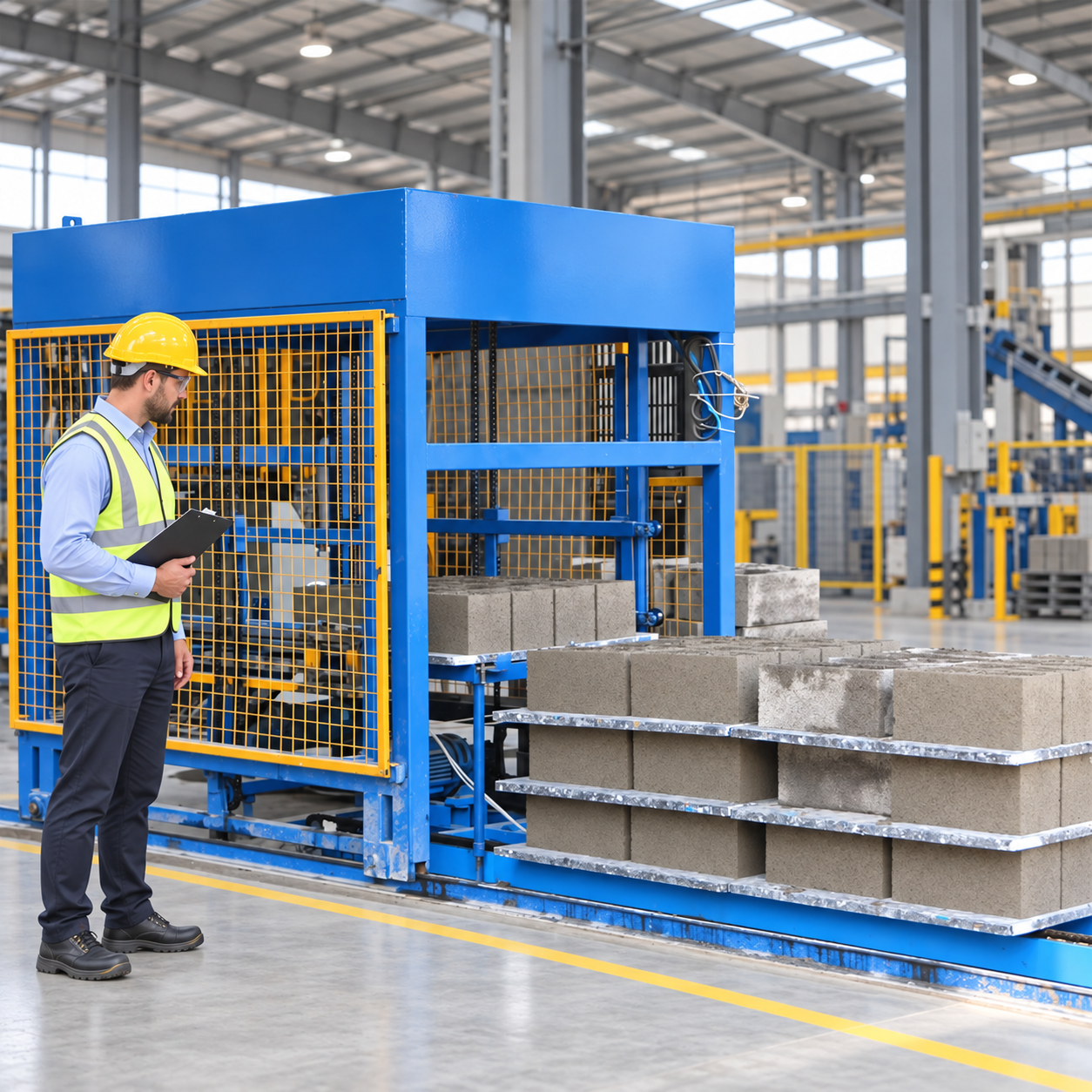
Why Consistent Feeding Matters
Good blocks start before the forming cycle begins.
If material is not distributed evenly inside the mold, the finished products may vary in height, density or surface quality.
The concrete mixture also needs to stay consistent.
Cement, sand, aggregate and water should be properly mixed before entering the machine. Depending on local production requirements, fly ash or other suitable materials may also be used.
A powerful machine cannot completely correct a poor concrete mix.
For this reason, the mixer, feeding system and main block machine should be planned as one production system rather than purchased separately without considering capacity matching.
Automation Is About More Than Labor
Automation is often described as a way to reduce labor.
That is true, but it is not the only benefit.
A PLC-controlled production line also helps coordinate the timing between different stages of production.
Instead of relying on workers to manually control every movement, the system can manage repetitive operations in a more predictable sequence.
Operators still have an important role.
They monitor raw materials, inspect finished blocks, adjust machine settings and carry out routine maintenance.
The difference is that they spend less time performing repetitive mechanical tasks.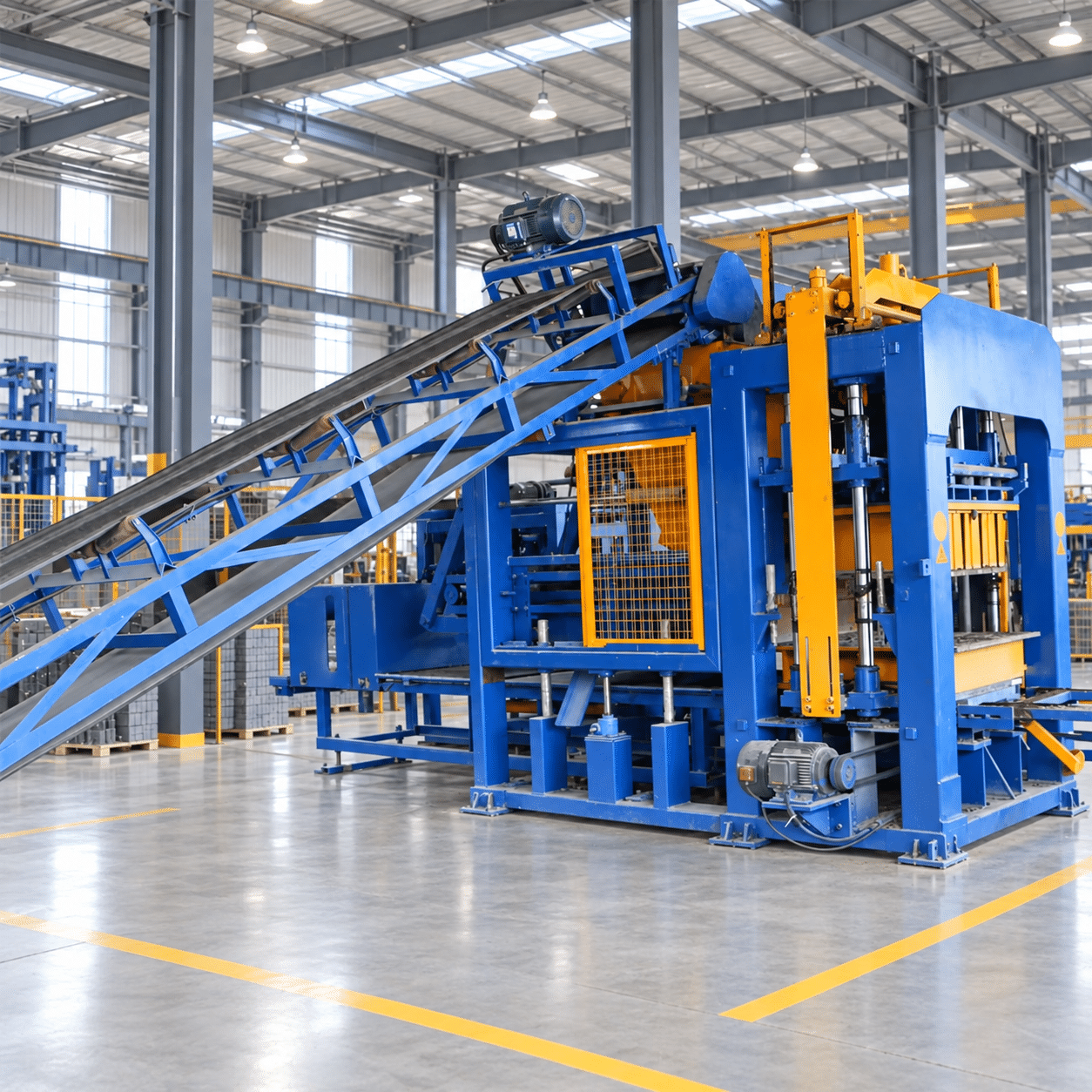
One Machine, Different Block Products
Another practical advantage of the QTF8-15 is mold flexibility.
With suitable molds, the same block machine can be used to produce different concrete products, including hollow blocks, solid bricks, paving blocks and curbstones.
This gives manufacturers more room to respond to local demand.
A factory may mainly produce hollow blocks for construction but also receive orders for paving products or another block size.
Instead of purchasing a second production line, changing the mold may allow the existing machine to handle the new product.
However, buyers should always provide exact block dimensions when asking about production capacity.
Different molds produce different numbers of blocks per cycle, so there is no single output figure that applies to every product.
Don’t Look at Output Alone
Production capacity is important, but it should not be the only factor when choosing a block machine.
A high theoretical output means little if the mixer cannot supply material fast enough or if finished pallets cannot be moved away from the machine efficiently.
The complete line needs to work at a similar rhythm.
Before buying, it is worth checking:
- the block sizes you plan to produce;
- locally available raw materials;
- required daily output;
- factory space;
- electrical supply;
- mold requirements;
- curing and pallet handling arrangements;
- spare parts and after-sales support.
These details have a much bigger impact on long-term production than a single number in a brochure.
What Can You Learn From a Working Video?
A production video is useful because it shows the machine outside of a specification sheet.
Watch several complete cycles.
Look at how material enters the mold.
Pay attention to how the forming section moves.
Watch how the fresh blocks leave the machine and how quickly the next cycle begins.
Most importantly, look at several finished products rather than one sample.
A reliable block machine should produce similar results repeatedly, not simply make one good block for a demonstration.
Is the QTF8-15 Right for Your Factory?
The QTF8-15 is a practical option for manufacturers who want more automation and higher production efficiency without immediately moving to the largest machine in the range.
It offers a useful balance between automatic operation, production capacity and mold flexibility.
For a growing block factory, that can be more valuable than simply choosing the biggest machine available.
The right block machine should match the products you plan to sell, the raw materials available in your market and the amount of production your business actually needs.
Start with those three points.
Then build the production line around them.
Looking for an Automatic Block Machine?
Tell us your block dimensions, raw materials, required daily capacity, local voltage and available factory space.
We can recommend a suitable QTF8-15 configuration, molds and supporting equipment based on your production requirements.
Contact us for machine videos, technical specifications and a customized quotation.
Email: [email protected]
Whatsapp: +86 15318522755