
QTF12-15 Automatic Block Machine: Built for High-Volume Concrete Block Production
For a growing block factory, there comes a point when adding more workers is no longer the best way to increase production.
The bigger challenge becomes keeping every stage of the line moving at the same pace.
Concrete has to be mixed and delivered on time. The mold needs to fill evenly. Fresh blocks have to leave the forming area without delaying the next cycle.
The QTF12-15 Automatic block machine is designed for this type of continuous production.
Rather than treating feeding, forming and block handling as separate jobs, the system brings them together into a more organized workflow. For manufacturers supplying construction projects or distributors at scale, that can make daily production easier to control.

What Happens During a Block Forming Cycle?
The forming process itself looks simple when you watch the machine running.
Prepared concrete enters the mold area and is distributed across the mold cavities. The machine then compacts the material through vibration and the forming system before releasing the newly made blocks onto a pallet.
The machine resets, and the next cycle begins.
The important part is not producing one good pallet.
It is repeating the same process throughout the working day.
A commercial block machine needs to maintain reasonably consistent filling, compaction and demolding over hundreds of production cycles. That repeatability is what allows a factory to maintain stable product dimensions and reduce unnecessary rejects.
Automation Is About Production Flow
People sometimes think of automation simply as using fewer workers.
That is only part of the story.
The bigger advantage is coordination.
When material feeding, molding and pallet movement are connected through an automatic control system, there is less dependence on workers manually timing each individual step.
The QTF12-15 uses PLC-based control to manage the production process. For the operator, this means more time can be spent monitoring machine conditions, raw materials and finished blocks rather than carrying out the same mechanical movements repeatedly.
Operators are still important.
They need to inspect products, adjust settings when materials change and carry out routine maintenance.
Automation simply gives them a more controlled production process to work with.
Why Material Feeding Matters
A good block starts before the press begins working.
If concrete is distributed unevenly inside the mold, one section of the block may receive more material than another.
That can lead to differences in height, density or surface finish.
For this reason, a high-capacity block machine needs a feeding system that can keep up with the forming cycle while distributing material consistently.
Concrete preparation matters just as much.
Cement, sand, aggregate and water need to be mixed evenly before the material reaches the machine. The best forming equipment cannot completely compensate for an inconsistent concrete mix.
When planning a production line, the mixer and feeding system should therefore be selected together with the main machine.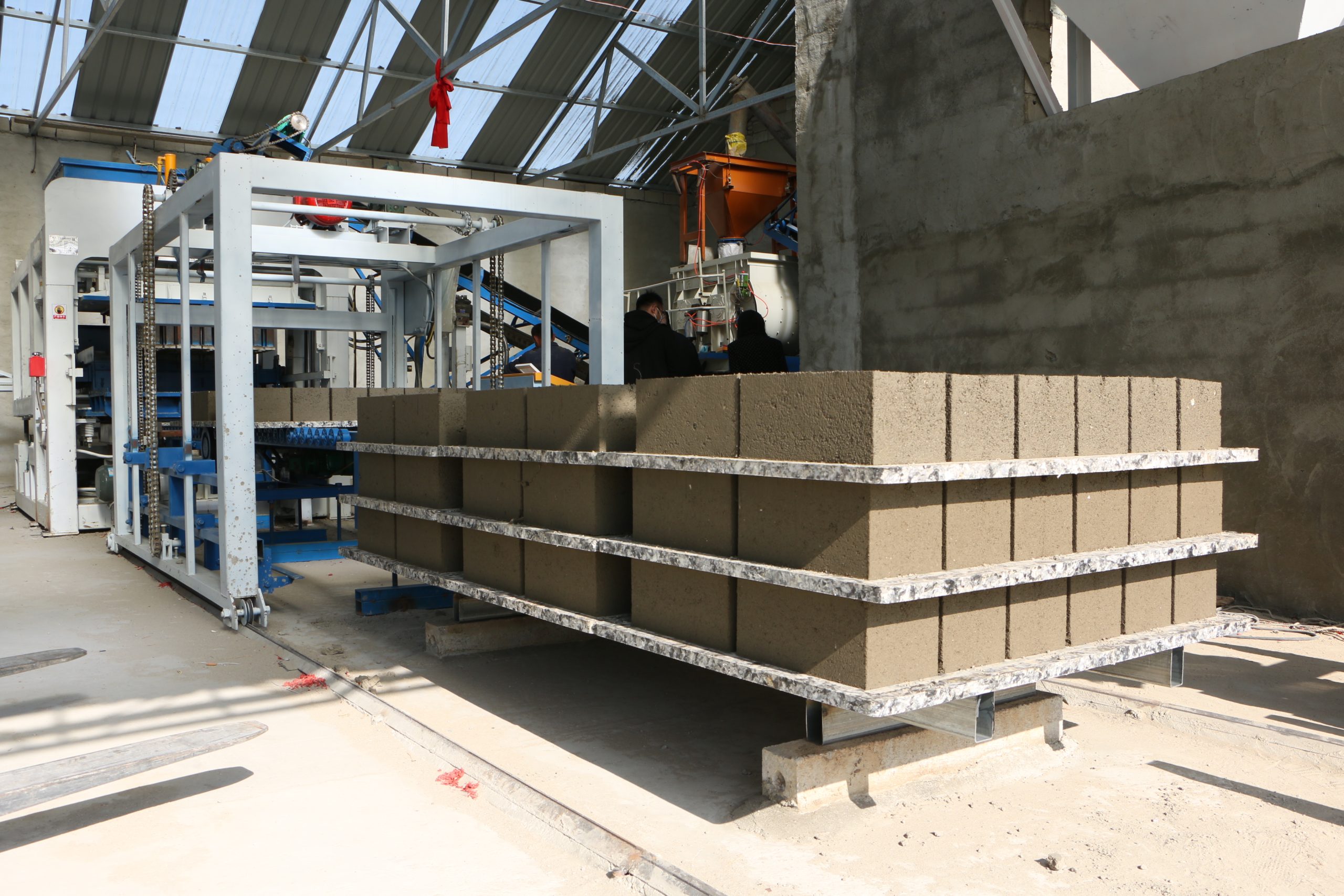
Different Molds, Different Products
One of the practical advantages of the QTF12-15 is the ability to work with interchangeable molds.
A manufacturer may need hollow blocks for building walls today and paving products for another customer next month.
With the correct mold configuration, the same machine platform can be used to manufacture different concrete products.
This gives a block factory more flexibility when market demand changes.
However, buyers should remember that mold design affects production capacity.
A large hollow block and a small paving brick will not produce the same number of pieces in each cycle.
That is why it is always better to send the supplier the exact block dimensions when asking about output.
Simply asking, “How many blocks can this machine make?” does not give enough information for an accurate answer.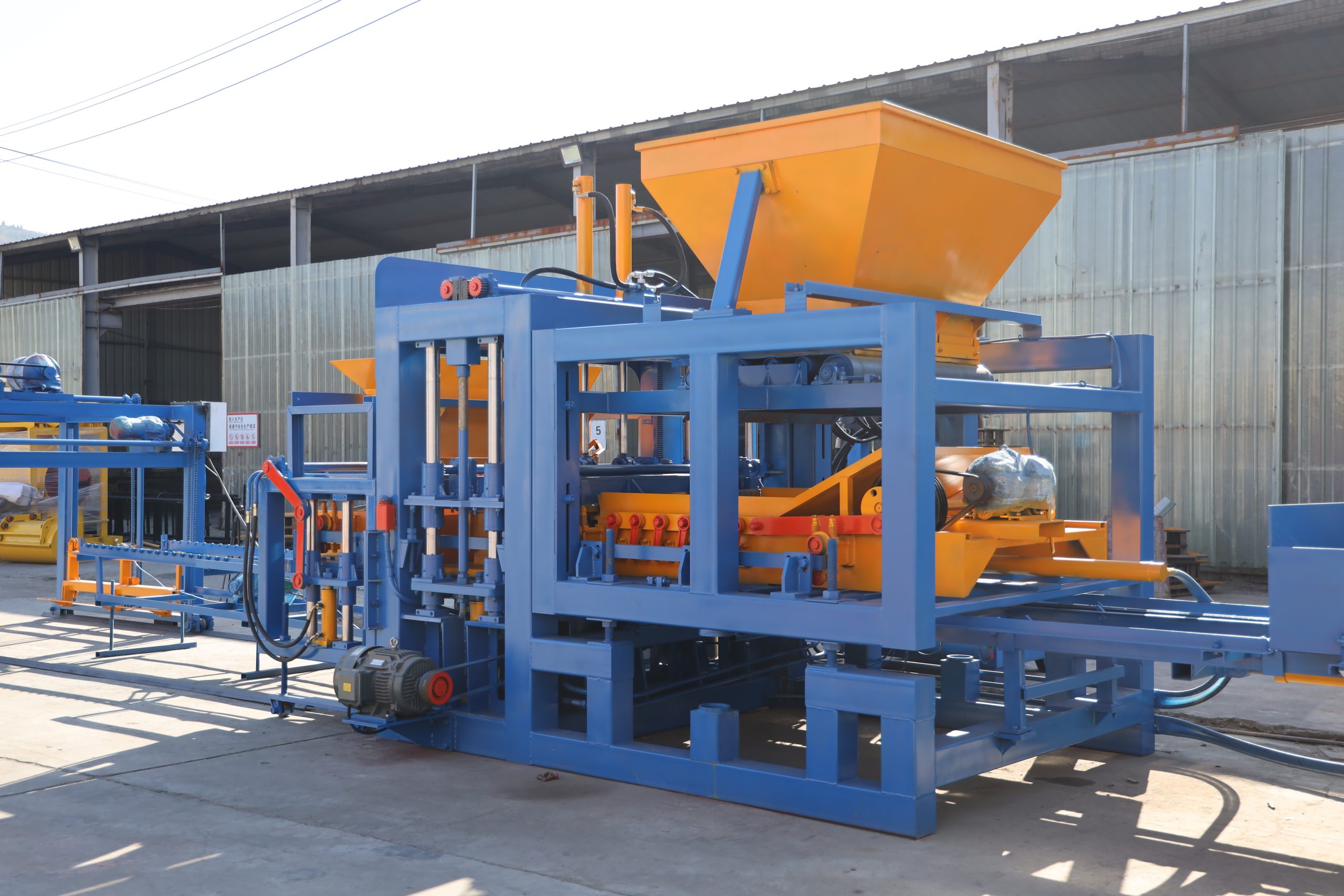
High Output Requires the Whole Line to Keep Up
A large block machine can only perform well when the equipment around it is properly matched.
If the mixer cannot prepare concrete fast enough, the main machine waits.
If pallets are not supplied on time, production stops again.
If fresh blocks cannot be transferred efficiently, the forming machine may have to slow down even though it is capable of operating faster.
This is why buyers should look at the entire production line instead of comparing only the specifications of the main machine.
A well-designed line should balance:
material preparation, mixing, feeding, block forming, pallet handling and finished product transfer.
When these stages are matched correctly, production becomes much smoother.
What Should You Look for in a Machine Video?
A working video can tell you things that are difficult to understand from a brochure.
Don’t watch only the finished blocks.
Watch how the machine moves through several complete cycles.
Look at how the material is fed into the mold.
Pay attention to the movement of the forming section.
See how the fresh blocks are released and transferred away from the machine.
Most importantly, compare several consecutive pallets.
Do the products look reasonably consistent?
Does the machine return smoothly to the next cycle?
Are there long pauses between operations?
These details give you a much better idea of how the block machine may behave during normal factory production.
Is the QTF12-15 Right for Every Factory?
Not necessarily.
A larger automatic production line makes the most sense when there is enough demand to use its production capacity.
For a small local producer making a limited number of blocks each day, a smaller semi-automatic or automatic machine may be more economical.
The QTF12-15 becomes more attractive when the factory needs higher output, more automation and the flexibility to produce several types of concrete products.
Before choosing a machine, buyers should consider:
- the exact block sizes they plan to produce;
- expected daily production;
- locally available raw materials;
- factory space;
- electrical supply;
- required molds;
- pallet and curing arrangements;
- spare parts and technical support.
These factors have a direct impact on how well the machine will fit the project.
More Than Just a Faster Block Machine
The value of the QTF12-15 is not simply that it is a larger machine.
Its real advantage is the ability to organize several stages of concrete block production into a repeatable process.
For a manufacturer moving toward higher-volume production, this can mean more consistent output, less manual handling and greater flexibility when different block products are required.
The right block machine should fit the products you intend to sell, the materials available in your market and the production capacity your business actually needs.
Start with those requirements.
Then build the production line around them.
Planning a Concrete Block Production Line?
Tell us your block dimensions, raw materials, required daily capacity, local voltage and available factory space.
We can recommend a suitable QTF12-15 configuration, molds and supporting equipment based on your actual production requirements.
Contact us for machine videos, technical specifications and a customized quotation.
Email: [email protected]
Whatsapp: +86 15318522755